Willa Becker · 5 October 2026
Tracing How Canonical Tag Adjustments Affect Duplicate Content Resolution in Enterprise Website Evolutions
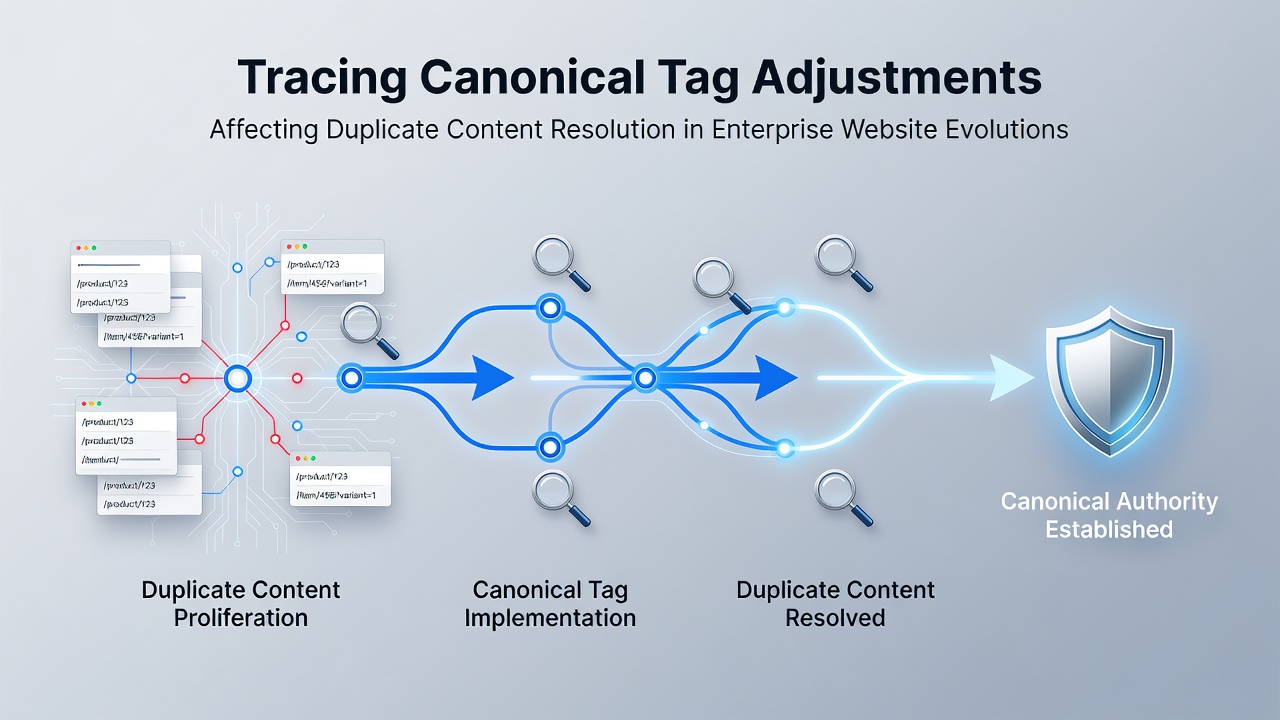
Enterprise websites frequently encounter duplicate content challenges when platforms evolve through redesigns, content migrations, and structural updates that create multiple versions of similar pages. Canonical tags serve as signals that direct search engines toward preferred URLs, and adjustments to these tags have become a documented method for resolving such issues across large-scale sites. Research indicates that consistent application of canonical directives reduces indexing conflicts by consolidating signals around primary content sources while enterprise teams manage ongoing changes.
Data from October 2026 shows increased reliance on these tags during platform transitions, where organizations track how tag modifications influence crawl patterns and content deduplication. Observers note that enterprise systems often generate duplicates through parameterized URLs, regional variants, and archived sections, creating scenarios where search engines must interpret which version holds authority. Adjustments involve mapping old URLs to new ones through precise canonical references that maintain equity without fragmenting visibility across duplicate sets.
Mechanisms of Canonical Implementation in Large Systems
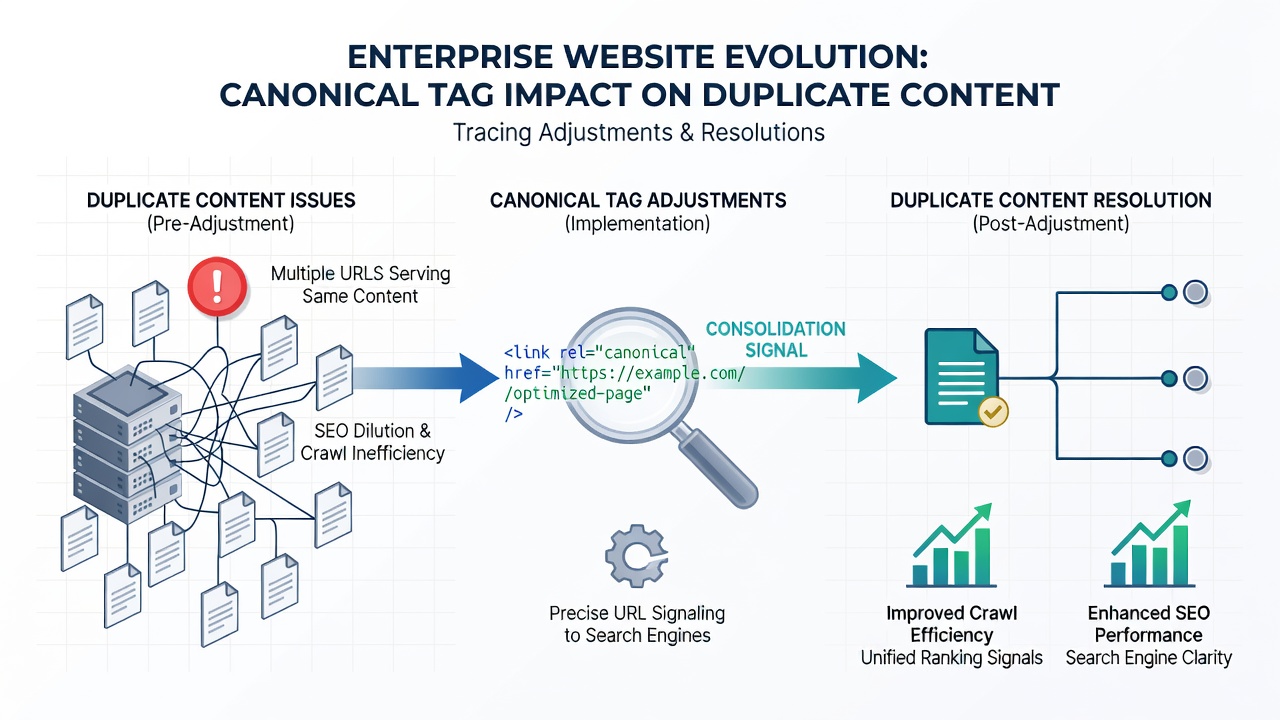
Canonical tags operate within HTML headers to specify the authoritative version of a page, and enterprise teams apply them systematically when content evolves across multiple domains or subdirectories. Studies reveal that incorrect or missing tags allow duplicates to compete for rankings, whereas targeted adjustments consolidate authority and improve overall site efficiency. Those who've examined enterprise logs find that tag updates often coincide with reduced crawl waste on secondary URLs, freeing resources for primary content discovery.
Implementation requires careful auditing of page relationships before changes occur, and data shows that automated tools combined with manual verification produce more reliable outcomes in complex environments. In October 2026 figures, enterprises that adjusted canonical references during evolutions reported measurable shifts in how search engines grouped similar content under single authoritative entries. The process connects directly to broader technical SEO practices that prioritize signal clarity over scattered indexing attempts.
Case Examples from Platform Transitions
One documented instance involved a multinational retailer that restructured product catalogs across regional sites, generating extensive duplicate entries from translated and localized pages. Canonical adjustments mapped variants back to core product URLs, and subsequent analysis indicated faster resolution of indexing overlaps compared to sites that delayed tag updates. Researchers discovered that phased rollouts, where tags were tested on subsets of pages before full deployment, minimized temporary disruptions during the transition period.
Another example comes from a financial services platform that migrated legacy content into a unified content management system. Duplicate articles from previous iterations created competing signals until canonical tags were calibrated to point toward updated, consolidated versions. Evidence suggests the adjustments contributed to stabilized search performance metrics within weeks of implementation, particularly when paired with server-side redirects for high-traffic pages.
Data Patterns Observed Across Multiple Evolutions
Analysis of enterprise website changes reveals recurring patterns where canonical tag refinements correlate with improved duplicate resolution rates. According to the W3C specification on link types, canonical references provide explicit guidance that search engines use to select representative URLs from duplicate clusters. Figures from industry monitoring in October 2026 highlight that sites applying these adjustments early in evolution cycles experienced lower rates of fragmented indexing than those addressing tags post-migration.
Academic reviews of large-scale web data further indicate that tag precision affects how engines allocate crawl budget, directing resources away from redundant pages toward updated content. Enterprises that maintain ongoing canonical audits during iterative updates show sustained benefits in content consolidation, and patterns emerge across sectors from e-commerce to media publishing. What's significant is the measurable impact on index coverage when tags align with actual content hierarchies rather than temporary structures.
Integration with Broader Technical Adjustments
Canonical modifications rarely occur in isolation, and they frequently intersect with updates to sitemaps, robots directives, and internal linking frameworks during enterprise platform shifts. Research from the University of Waterloo study on web crawling dynamics demonstrates how coordinated changes across these elements amplify duplicate resolution outcomes. Teams track tag performance through search console data and log analysis to confirm that adjustments produce the intended consolidation effects without unintended side effects on related pages.
Enterprises often schedule these refinements alongside content audits that identify duplicate clusters before they proliferate across new site architectures. October 2026 observations confirm that organizations using structured workflows for tag management achieve more consistent results, particularly when multiple teams contribute content across evolving platforms. The approach supports scalable maintenance as sites continue to expand and restructure over time.
Conclusion
Canonical tag adjustments represent a core technique for addressing duplicate content during enterprise website evolutions, supported by patterns in crawl data and indexing metrics. Organizations that integrate these changes methodically see measurable improvements in how search engines interpret content authority across complex site structures. Ongoing monitoring remains essential as platforms continue to evolve and new duplicate scenarios arise from updates or expansions.