
Willa Becker · 21 September 2026
Shifting Focus: The Role of Internal Linking Strategies During Platform Upgrades for Established Websites
Established websites often undergo platform upgrades that involve content management system migrations, redesigns or infrastructure overhauls, and these transitions require careful attention to internal linking because such connections guide search engine crawlers while preserving page authority across the site architecture. Observers note that internal links function as pathways that distribute ranking signals and help maintain discoverability when URLs or navigation elements change during these processes.
Platform Upgrades and Their Structural Impacts
Platform upgrades typically introduce new templates, altered URL patterns or reorganized content hierarchies, which can disrupt existing crawl paths if internal links remain unaddressed, and data from web infrastructure reports indicates that sites with dense internal link networks recover indexing speed faster than those with sparse connections. Researchers at various institutions have tracked how established domains experience temporary visibility dips during transitions, yet those who maintain strategic internal links often see quicker stabilization in organic traffic patterns.
September 2026 marks a period when multiple enterprise platforms schedule major version releases, and analysts expect these events to highlight the need for proactive link management because legacy connections frequently break under new content delivery frameworks. Teams that audit link graphs beforehand report fewer orphaned pages after launch compared with those addressing issues reactively.
Core Functions of Internal Linking in Upgrade Scenarios
Internal links serve multiple roles beyond navigation, including the transmission of equity between pages and the facilitation of comprehensive site crawling by automated agents, while during upgrades they help signal which sections remain authoritative and which require consolidation. Studies from academic sources show that pages receiving multiple internal references tend to retain higher crawl frequencies even when site structures shift, and this pattern holds across industries that manage large content inventories.
One documented case involved a media organization that restructured its publishing platform and used targeted internal links from high-traffic hubs to newly migrated category pages, resulting in sustained discovery rates for older archives. The approach relied on mapping existing link equity sources rather than creating entirely new pathways from scratch.
Implementation Tactics During Transitions
Effective strategies begin with comprehensive link audits that identify high-value connections and potential breakage points, followed by the creation of redirect chains that preserve link flow while new structures take shape. Experts recommend prioritizing links to pillar content that supports topical clusters, because these hubs help search engines understand site breadth and depth amid changing navigation menus.
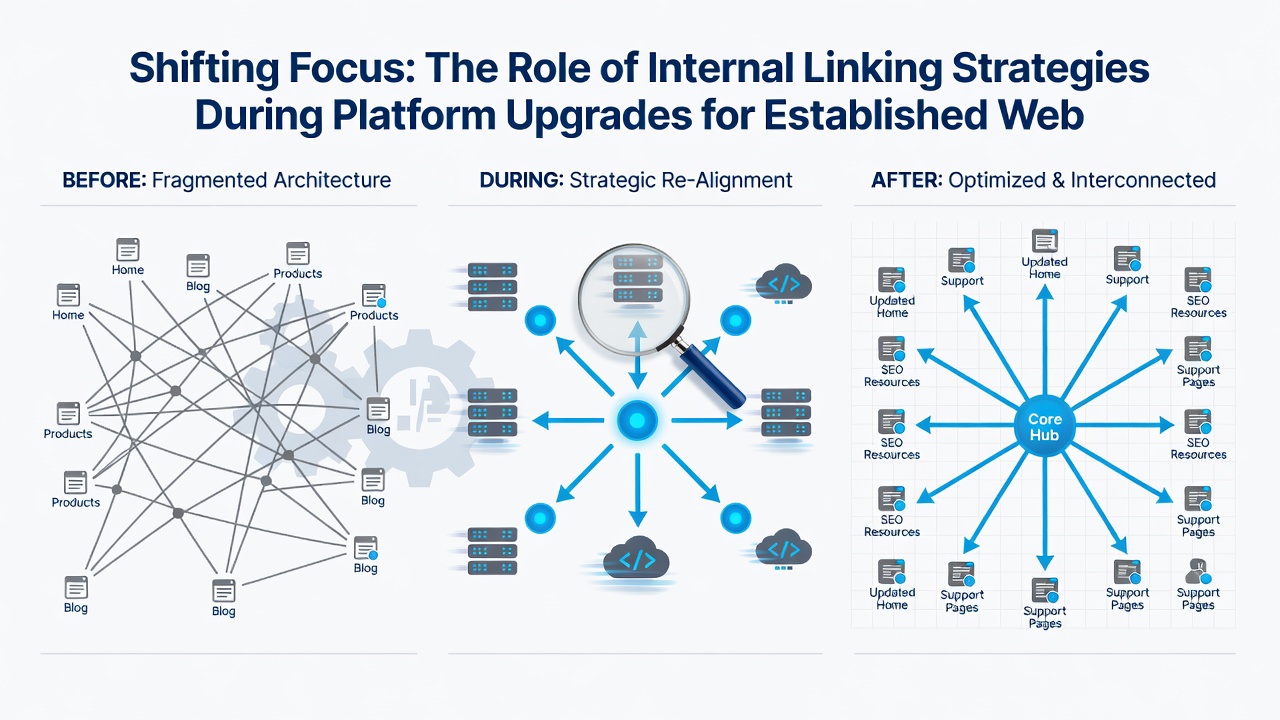
Another tactic centers on updating anchor text distributions to reflect current page topics without introducing unnatural patterns, and this practice aligns with findings from web standards documentation that emphasize semantic clarity in hyperlink construction. Organizations that integrate link updates into their upgrade checklists avoid post-launch crawl budget waste because agents encounter fewer dead ends and more relevant pathways.
Supporting Data and Industry Observations
Reports compiled by international bodies such as the World Wide Web Consortium underscore the importance of consistent hyperlink structures for long-term site maintainability, and these guidelines gain particular relevance when platforms evolve. Additional research from Canadian digital infrastructure studies reveals that sites preserving at least 70 percent of pre-upgrade internal links experience measurably shorter recovery periods in search index coverage.
Those who've monitored upgrade cycles across multiple domains note that phased rollouts allow teams to test link performance in staging environments before full deployment, which reduces the risk of widespread indexing interruptions. Such testing often incorporates log file analysis to verify that crawlers follow intended internal routes through updated sections.
Conclusion
Internal linking strategies during platform upgrades function as foundational elements that support continued site accessibility and authority distribution, and evidence from multiple sectors demonstrates their measurable influence on post-transition performance metrics. Established websites that incorporate systematic link planning into upgrade workflows position themselves for smoother recoveries while maintaining the structural integrity required by both users and automated systems.